Opening times
From 01/01 to 31/12.
Practical information
Prices
Free access.
Route information
- Distance : 23.11 km
- Elevation gain : 704 m
Download PDF file
Download GPX file
Learn more
The world’s first guidebook
Also known as the Codex Calixtinus due to its preface by Pope Calixtus II, the Liber Sancti Jacobi is one of the oldest records of the veneration of the Apostle James the Greater during the Middle Ages. It is a compilation of five books, the original of which, dated around 1139, is preserved in Santiago de Compostela, namely:
- a collection of liturgical services, sermons and odes,
- an account of the miracles attributed to Saint James the Greater,
- the account of the apostle’s evangelisation of Galicia and that of his martyrdom,
- a chanson de geste about Charlemagne and Roland, - the pilgrim’s guide.
The fifth of these books, the pilgrim’s guide, is attributed to Aimery Picaud, a 12th-century cleric from Poitou. Eleven chapters offer a wealth of information for anyone wishing to undertake a fruitful pilgrimage to
Santiago de Compostela under the best possible conditions. The four French routes (Paris, Vézelay, Le Puy and Arles) and the Spanish route (Camino Frances) are the subject of the first seven chapters: the history and geography of the towns and regions traversed, descriptions of places…
Aimery Picaud takes a meticulous interest in the local populations, focusing primarily on their attitudes and willingness to welcome pilgrims. The languages spoken, local customs and even dietary habits are all documented!
The eighth chapter explores the religious aspect of the journey. It includes a list of places of worship encountered along the routes: shrines and relics in particular. The life of a saint is often recounted, along with the graces that may be obtained through their intercession. As the journey’s destination, the city of Santiago de Compostela forms the central focus of the final three chapters. The welcome extended to pilgrims there plays a significant part. In this guide, the starting points of Paris, Vézelay, Le Puy and Arles are regarded as gathering points, themselves places of devotion and the beginning of a long spiritual journey. Whilst there have certainly been ups and downs in terms of visitor numbers, nothing has contradicted Aimery Picaud in nearly nine centuries.
Also known as the Codex Calixtinus due to its preface by Pope Calixtus II, the Liber Sancti Jacobi is one of the oldest records of the veneration of the Apostle James the Greater during the Middle Ages. It is a compilation of five books, the original of which, dated around 1139, is preserved in Santiago de Compostela, namely:
- a collection of liturgical services, sermons and odes,
- an account of the miracles attributed to Saint James the Greater,
- the account of the apostle’s evangelisation of Galicia and that of his martyrdom,
- a chanson de geste about Charlemagne and Roland, - the pilgrim’s guide.
The fifth of these books, the pilgrim’s guide, is attributed to Aimery Picaud, a 12th-century cleric from Poitou. Eleven chapters offer a wealth of information for anyone wishing to undertake a fruitful pilgrimage to
Santiago de Compostela under the best possible conditions. The four French routes (Paris, Vézelay, Le Puy and Arles) and the Spanish route (Camino Frances) are the subject of the first seven chapters: the history and geography of the towns and regions traversed, descriptions of places…
Aimery Picaud takes a meticulous interest in the local populations, focusing primarily on their attitudes and willingness to welcome pilgrims. The languages spoken, local customs and even dietary habits are all documented!
The eighth chapter explores the religious aspect of the journey. It includes a list of places of worship encountered along the routes: shrines and relics in particular. The life of a saint is often recounted, along with the graces that may be obtained through their intercession. As the journey’s destination, the city of Santiago de Compostela forms the central focus of the final three chapters. The welcome extended to pilgrims there plays a significant part. In this guide, the starting points of Paris, Vézelay, Le Puy and Arles are regarded as gathering points, themselves places of devotion and the beginning of a long spiritual journey. Whilst there have certainly been ups and downs in terms of visitor numbers, nothing has contradicted Aimery Picaud in nearly nine centuries.
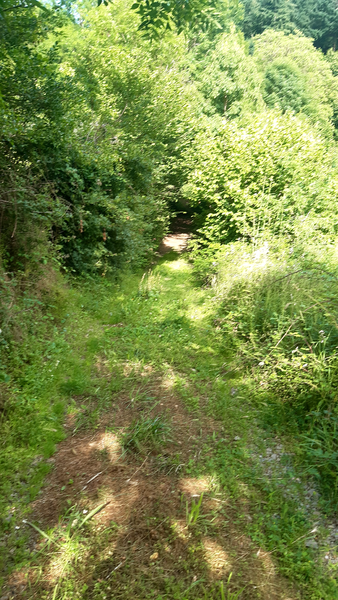
Walk through the Prince’s Wood
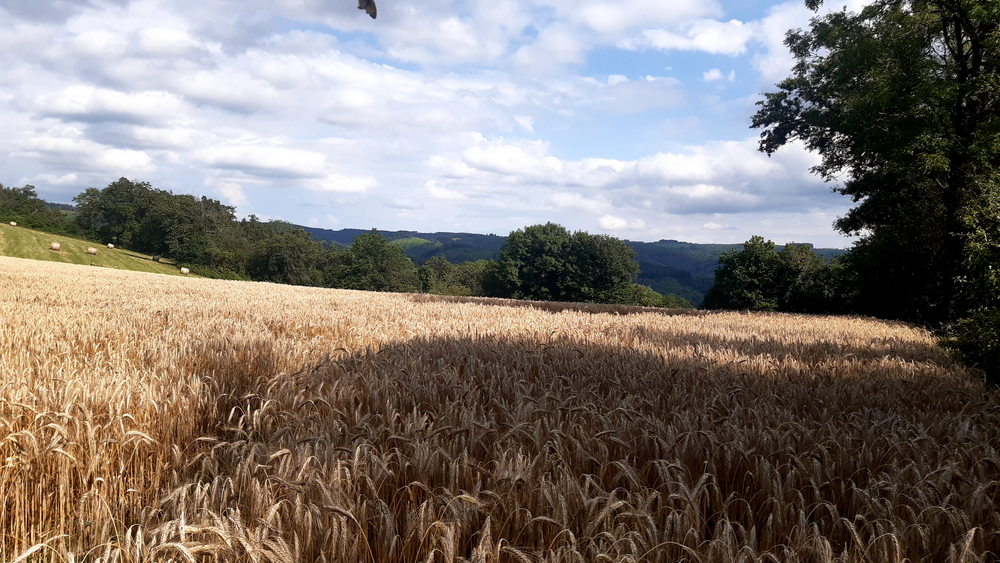
Camin Traversut walk
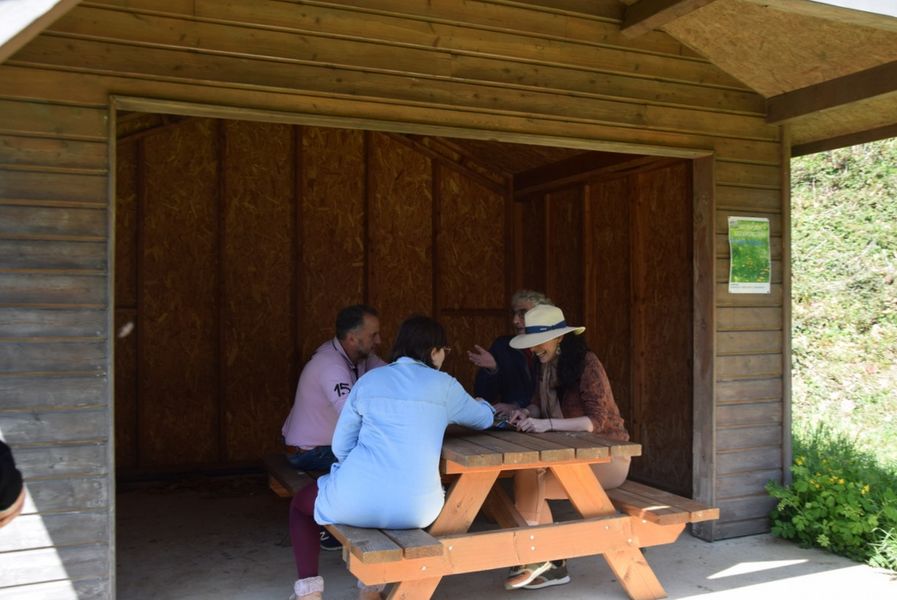
Aire de pique nique l'Arboretum de Cambounès

Mountain Bike Trail No. 8 – Cambounès (Brassac area)
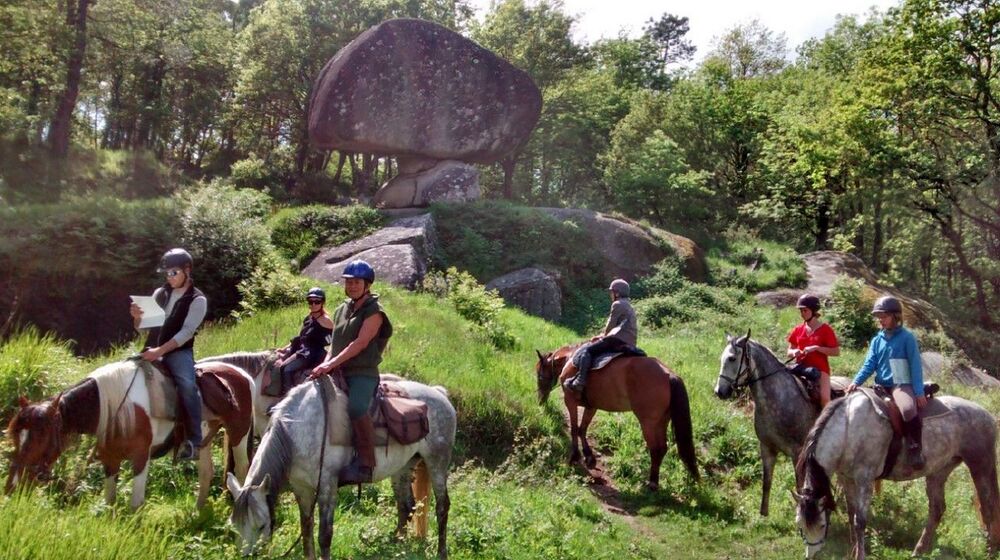
Tour du Tarn à cheval - Les boucles en Hautes Terres d'Oc
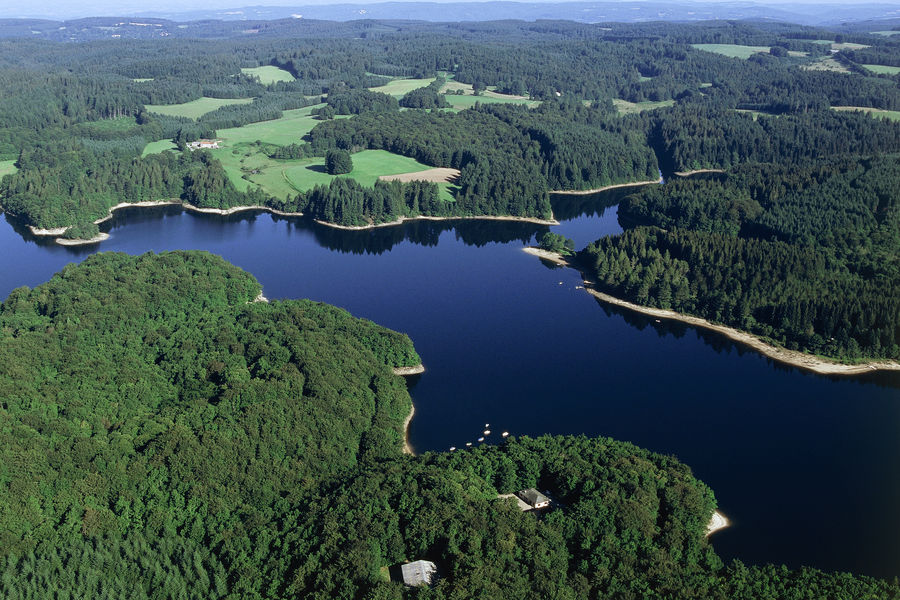
A horse-riding tour of the Tarn: Cambounès / Anglès

La Forêt de Montagnol